
When a company introduces AI, workflows, roles and requirements change. That makes every AI rollout an organizational and workforce decision as much as a technical one. Involving employees early leads to faster, steadier adoption.
In short: Early participation makes the AI rollout more durable and faster. Works councils raise training exactly for the employees whose tasks automation affects most.
What the research shows
With co-authors, I studied how co-determination and training relate during technological change. The basis is the German BIBB training panel; the work was published in the British Journal of Industrial Relations.
The core finding: works councils raise both the likelihood that a firm offers training and the rate of participation in it. The effect is strongest for low-skilled employees, the group whose tasks automation is most likely to affect.
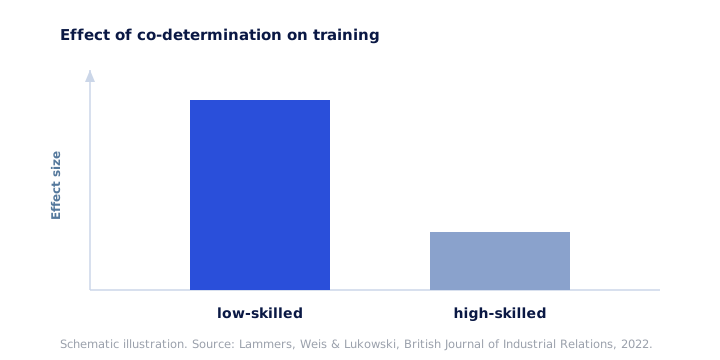
It concentrates in firms operating below the industry technology level, where councils act as advocates for upskilling. In already highly digitized firms, employers drive training anyway, and the additional contribution of co-determination is small.
Why this mechanism matters for AI
AI shifts tasks, it rarely removes them entirely. Work changes, requirements rise, and new tools need to be mastered. Where employees experience that upskilling comes with the technology, acceptance grows instead of resistance. Co-determination is a channel through which this link forms reliably: it turns an abstract announcement into a concrete offer that reaches the right people.
What this means for AI projects
Three practical consequences for introducing AI:
- Involve co-determination early. The works council is a lever for acceptance and for targeted upskilling. Early involvement speeds up the rollout.
- Enable the exposed groups first. Training too often reaches those who need it least. Effective programs target the tasks that AI changes most.
- Make enablement role-based. From the board to the front line, every role needs its own level of AI literacy.
Takeaway
AI succeeds where the organization carries it. Participation and upskilling decide whether a transformation works. Companies that plan both early adopt AI faster and more reliably, and they do it on a footing that gives the workforce security rather than presenting it with a done deal.