
Whether digital and AI initiatives succeed is decided by the interplay of three forces: technology, organization and people. Impact emerges where they overlap.
In short: Technology alone produces no impact. It emerges at the intersection of technology, organization and people, carried by strategy, competence and culture.
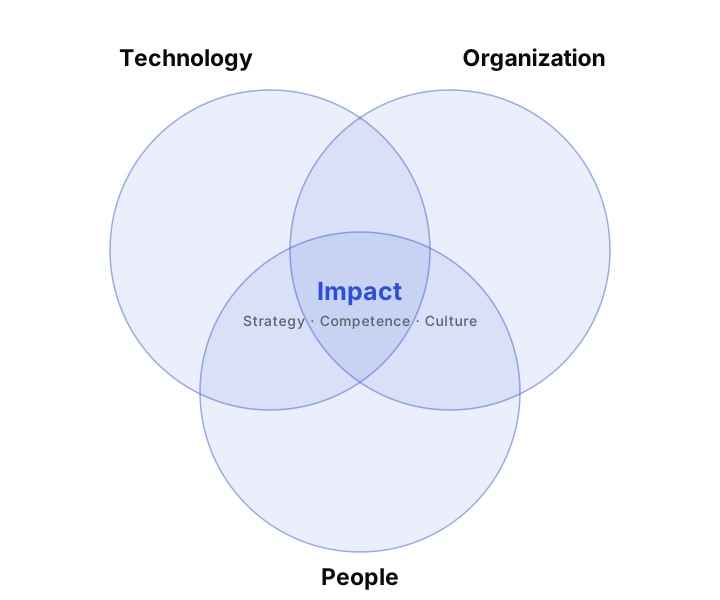
Technology
Machine learning and AI provide capabilities. They deliver value when they are aligned with concrete business goals and cleanly integrated into existing processes. A model that impresses technically but connects to no process stays an experiment.
Organization
Leadership, governance and structures shape how technology and people work together. Cross-functional teams and room to experiment decide whether a pilot becomes a productive system. This is the most common breaking point: the technology is ready, but the organization is not set up to carry it.
People
Adoption carries success. Continuous learning, AI literacy and genuine participation make sure people actually use the new tools and help shape them. Without that acceptance, even the best solution goes unused.
The center: strategy, competence, culture
The transformation sits at the intersection of the three circles. Three things carry it:
- Strategy: align investment with business goals, with a robust data governance for quality, security and compliance.
- Competence: targeted upskilling and AI literacy across every role, from the board to the business units.
- Culture: curiosity, openness and a learning mindset.
What it all converges on
Every element points to the same thing: measurable impact. Efficiency gains, better customer experiences or new revenue streams. Set the stage well, and AI capabilities turn into business outcomes.
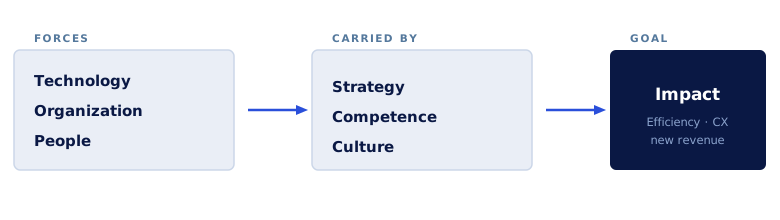
The order is not optional. Start with the technology and pull organization and people along later, and you lose time and trust. Set the stage first, and initiatives reach production faster and more reliably.